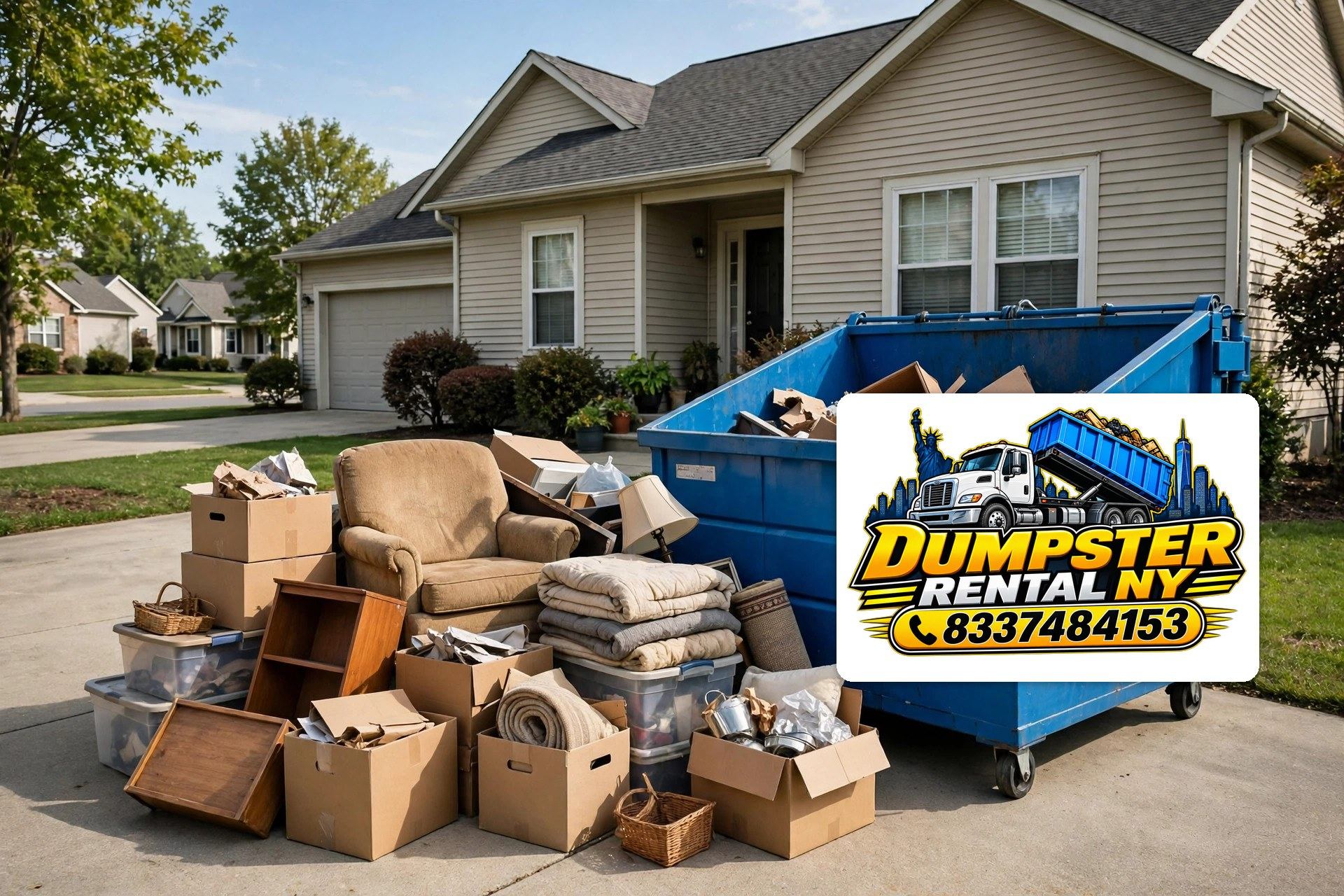
The middle size that fits the jobs a 10 yard box cannot quite hold. About 4 to 5 pickup loads, still driveway friendly, built for real renovation debris.
A 15 yard dumpster holds 4 to 5 pickup truck loads. It measures 16 feet long, 7.5 feet wide, and 4.5 feet tall, with an included weight allowance of about 2 tons. It sits in the gap that catches a lot of real projects: too much debris for a 10 yard dumpster, not enough to justify a 20 yard dumpster. Basement finishes, deck removals, flooring through several rooms, and serious downsizing cleanouts are the classic 15 yard jobs. Call (833) 748-4153, describe the rooms or the structure you are clearing, and we will tell you honestly whether the 15 yard box is the right fit.
The 15 yard box earns its place because renovation debris is lumpy. A basement finish produces drywall, framing lumber, old carpet, and a pile of boxes from the storage corner, and it rarely comes out to a neat number of pickup loads. A deck removal produces long boards that eat space fast. A downsizing cleanout produces furniture that fills volume without weighing much. In all three cases the 15 yard box gives you breathing room over the 10 yard without the footprint and wall height of the 20 yard. That breathing room is the difference between finishing on a Saturday and calling for a second container on Monday.
| Spec | 15 yard dumpster |
|---|---|
| Length | 16 ft |
| Width | 7.5 ft |
| Height | 4.5 ft |
| Capacity | 4 to 5 pickup loads |
| Included weight | About 2 tons |
| Standard rental | 7 days, longer rentals available |
At 16 feet long, the 15 yard box fits most suburban driveways in Long Island, Westchester, and the upstate metros, and it fits many city driveways too, though a short Brooklyn or Queens driveway may still be tight. The 4.5 foot walls are low enough to toss debris over by hand, which matters when you are loading drywall and lumber all day. The weight allowance of about 2 tons is the number to respect: this box is built for mixed renovation debris and household junk, not for a full load of concrete or dirt. Heavy material belongs in a 10 yard dumpster, and our concrete dumpster rental page explains why.
Basement finishes and basement cleanouts. Finishing a basement means tearing out old paneling, carpet, and sometimes a drop ceiling, then clearing the storage that lived down there. A 15 yard box handles the demo debris plus the junk in one load. If the basement has water damage and you are removing soaked carpet and drywall, mention it when you book so the driver and the disposal plan match the load. Wet material is heavy, and weight is the limit to watch.
Deck removal. A medium deck, roughly 200 to 300 square feet of decking plus rails and posts, fits a 15 yard box when the boards are cut down and stacked flat. Long boards are the enemy of space: cut them to fit the 16 foot length of the box and stack them like lumber, not like pickup sticks. Footings and concrete piers are a separate question, because concrete is heavy. Small amounts mixed in are usually fine, but a pile of concrete footings belongs in a small heavy debris box, so call us if the deck has big concrete footings.
Downsizing and multi room cleanouts. Moving from a house you have lived in for twenty years means clearing two or three rooms of accumulated furniture, boxes, and old appliances. The 15 yard box is the downsizing size: big enough for a bedroom set, a living room set, and a dozen boxes, small enough to sit in the driveway without blocking the neighbors. Break furniture down where you can, and load the bulkiest pieces first so smaller items can fill the gaps.
Flooring removal through several rooms. Carpet, pad, laminate, and engineered wood from three or four rooms fill a 15 yard box fast, because flooring debris is bulky and springy. Roll carpet tight and tie it, stack laminate flat, and keep the load level. Tile flooring is heavier, so a large tile removal may need a weight conversation before you book.
Small kitchen refresh. A cabinet swap, a countertop replacement, and a backsplash removal, without moving walls or gutting to the studs, is a 15 yard job. A full kitchen gut with plaster and lath walls is a 20 yard job, because plaster is heavy and bulky at the same time, which is a hard combination.
A 15 yard box will not hold a whole home renovation, a full estate cleanout, a large roofing tear off, or a multi room gut renovation. If your project list includes three or more rooms of debris, or a roof, or a whole house of contents, step up to the 20 yard dumpster or the 30 yard dumpster. Heavy debris is the other limit: a 15 yard box full of concrete, brick, or dirt would exceed its weight allowance, so heavy loads stay in the 10 yard box. When you call, tell us both the volume and the material, and we will match the box to both.
Deck tip: cut deck boards to fit the box and stack them flat. Loose long boards waste half the space in any container. Call (833) 748-4153 if your deck has concrete footings, so we can plan the heavy portion separately.
The 15 yard box is a mixed debris container, not a heavy debris container. Small amounts of tile, brick, or concrete mixed into a load of household junk or renovation debris are normal and fine. A load that is mostly concrete, brick, dirt, or roofing shingles is not, because those materials weigh far more per cubic yard than the box is rated to carry. If your project produces both light debris and a real pile of heavy debris, the practical answer is often two containers: a 15 yard box for the light material and a 10 yard box for the heavy material. That sounds like more work, but it is the only way the heavy load stays legal to haul, and it keeps the light load from being rejected at pickup. Tell us what is going in when you book, and we will plan it with you.
Household junk, furniture, mattresses, carpet, drywall, wood, siding, roofing shingles in small amounts, concrete in small amounts, brick in small amounts, dirt in small amounts, and yard waste are all fine in a 15 yard dumpster. New York law keeps some items out of every dumpster, whatever the size:
Mattresses are generally accepted. Appliances are fine once refrigerant has been recovered from any unit that has it. If you are unsure about a single item, call (833) 748-4153 before you load it.
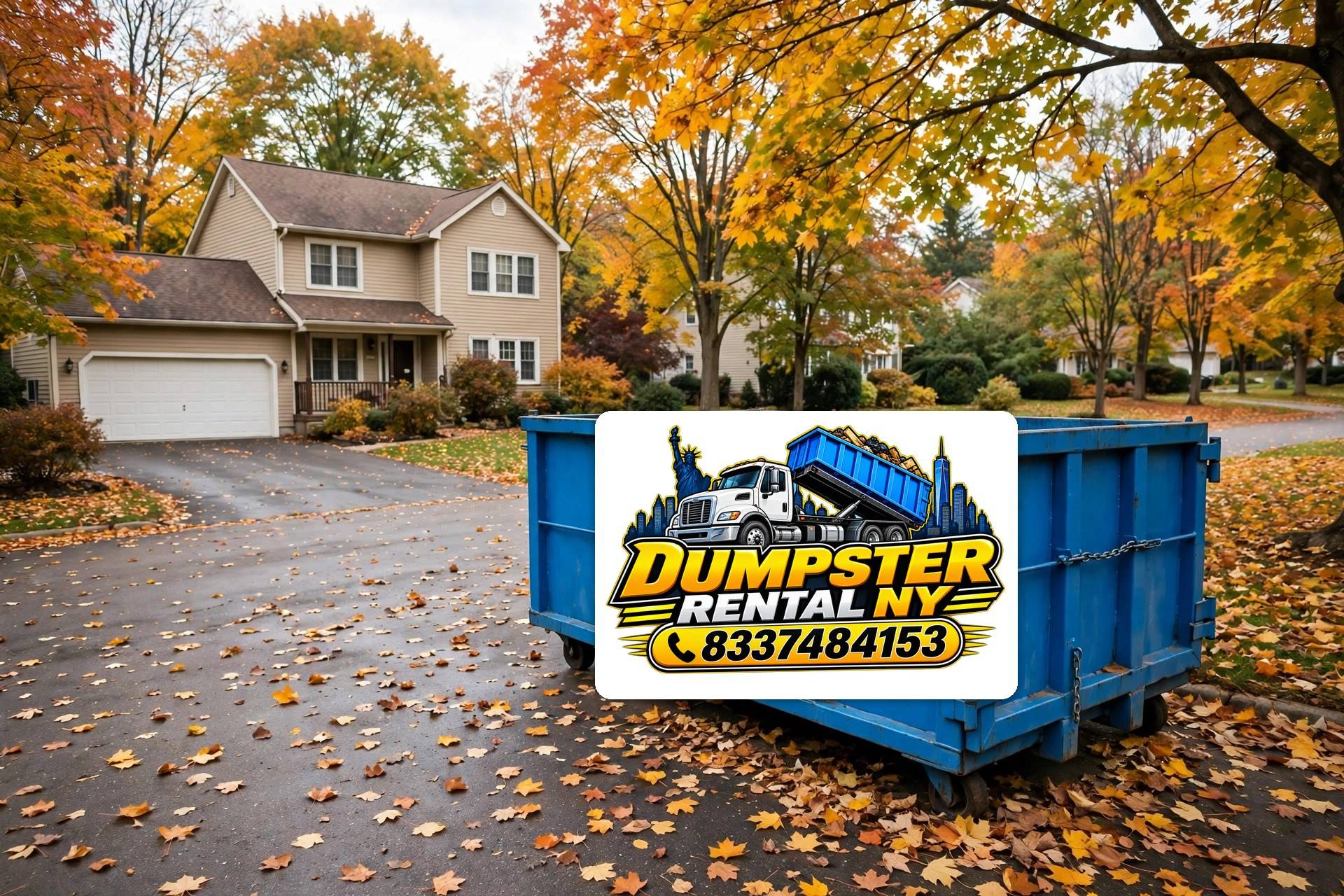
The delivery truck needs about 60 feet of clear space to drop the container and roughly 23 to 25 feet of vertical clearance. The 15 yard box is 16 feet long, so it needs a driveway with at least that much clear length plus room for the truck to work. Park cars on the street or in the garage, move bins and basketball hoops, and check for low wires and low branches over the drop spot. Mention steep grades, tight turns, and narrow streets when you book. A sloping Hudson Valley driveway, a narrow Westchester lane, or a Buffalo street narrowed by snowbanks all change the delivery plan, and the booking call is where we sort that out.
Boards under the container rails spread the load and protect asphalt in summer heat, pavers, and decorative concrete. Mention your driveway surface when you book and we will note it for the driver. If the box has to sit on the street, a permit is usually required, so read the permit section below before you settle on street placement.
A dumpster placed entirely on private property, such as your driveway, generally needs no permit anywhere in New York State. A dumpster placed on a public street or in the right of way usually needs a municipal permit. In New York City, container permits are issued by NYC DOT, not DSNY, and the standard Commercial Refuse Container permit covers one container for up to 5 consecutive days, obtained by the carting company. Upstate cities run their own programs: Buffalo requires a Public Works permit applied for at least 7 business days ahead, with proof of liability insurance, Rochester requires a right of way permit, Syracuse issues right of way permits through its Central Permit Office, Albany uses a Sidewalk and Barricade Permit, and Yonkers requires an Engineering Department permit. Permit rules vary by municipality, so call us for guidance on your city before you book a street placement. And remember Dig Safely New York: call 811 before any ground disturbance.
Load the bulkiest flat items first, along the floor, then stack lumber and drywall flat on top of them. Fill gaps with bagged debris and small items as you go, so you are not left with air pockets at the end. Keep the load level with the top rail, and never let debris stick out over the sides. Roll carpet tight, break down boxes, and take furniture apart where you can. If you run out of room with debris left over, call us and we can arrange a pickup and, if needed, a second container. The standard rental period is 7 days, and longer rentals are available. If you need a container quickly, call and ask about availability for your area and your date.
About 4 to 5 pickup loads: a basement finish, a medium deck removal, flooring through several rooms, a small kitchen refresh, or a serious downsizing cleanout.
Yes, a medium deck fits well when boards are cut down and stacked flat. Concrete footings are heavy, so mention them when you book and we will plan the heavy portion separately.
Small amounts mixed into a light load are fine, but a load that is mostly concrete, brick, or dirt would exceed the weight allowance. Heavy debris belongs in a 10 yard container.
At 16 feet long it fits most suburban driveways in New York. The delivery truck still needs about 60 feet of clear space and 23 to 25 feet of vertical clearance.
Not if it sits entirely on private property such as your driveway. Street placement usually needs a municipal permit, and in New York City those permits come from NYC DOT, not DSNY.
The standard rental period is 7 days, and longer rentals are available. Call (833) 748-4153 to arrange the schedule that fits your project.