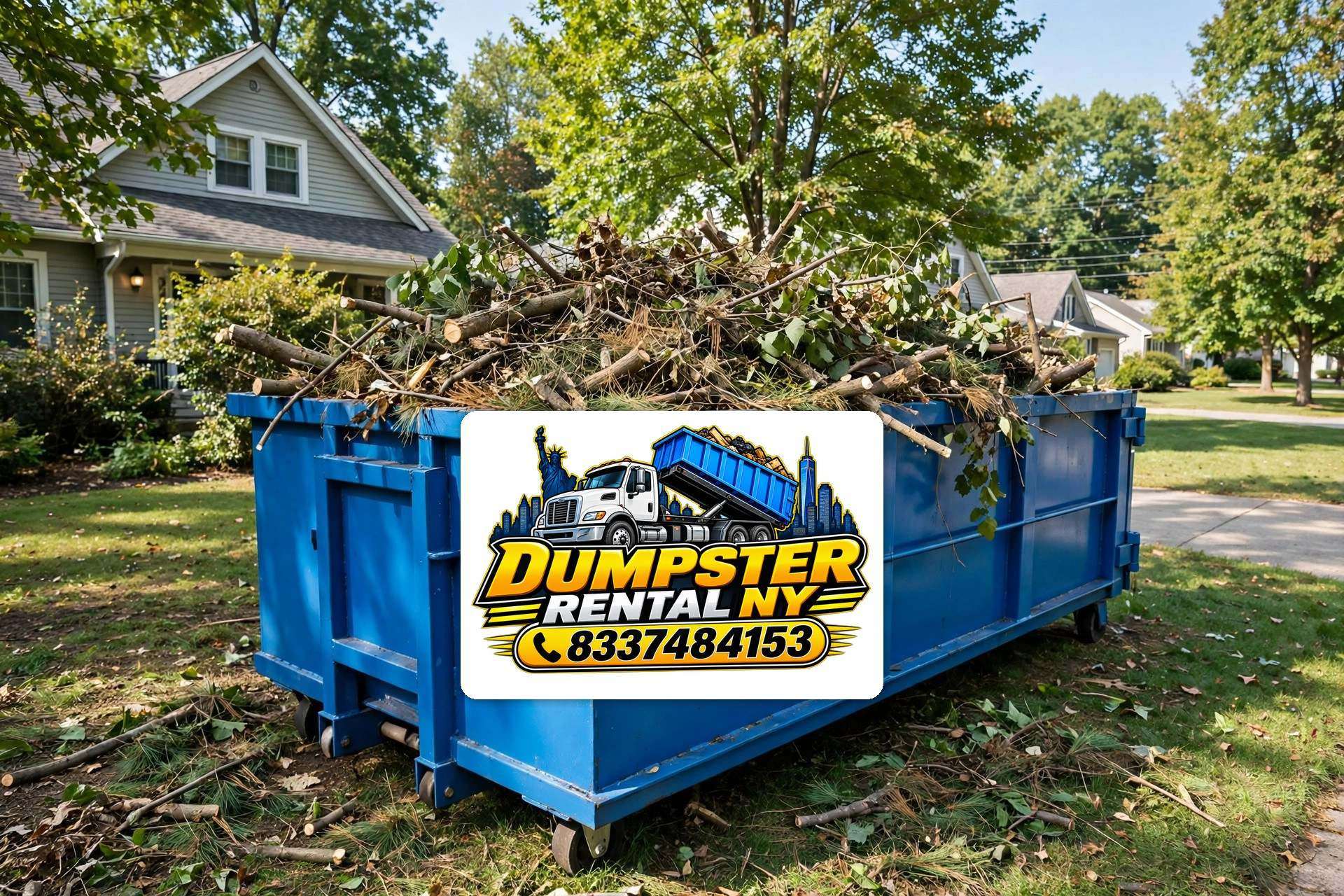
Storm debris, tree limbs, brush, leaves, and full yard cleanups. Big spring and fall cleanups are exactly what these boxes are made for.
Yard waste looks light and harmless until you start loading it. Tree limbs are long and springy, brush is bulky and full of air, leaves compress and then expand, and a single storm can drop a season of debris across a property in one night. A yard waste dumpster turns a pile of limbs and brush into one phone call and one pickup, instead of a dozen trips with a trailer or a season of curbside bundles. Call (833) 748-4153, describe the yard and the debris, and we will size the box to the job.
New York yards produce debris year round, with two peaks. Spring brings the winter damage: limbs broken by snow and ice, brush cut back, and garden beds cleared for planting. Fall brings leaf cleanup, hedge trimming, and garden shutdown before winter. Summer storms add their own peak, especially on Long Island's South Shore and in Buffalo, where lake effect storms and nor'easters drop limbs and whole trees. Storm debris is the most urgent yard job, because a tree across a driveway or a limb on a roof cannot wait for a convenient week.
| Size | Dimensions | Capacity | Included weight | Best for |
|---|---|---|---|---|
| 10 yard | 14 ft long, 7.5 ft wide, 3.5 ft tall | About 3 pickup loads | 1 to 2 tons | Small cleanout, half bath remodel, heavy debris |
| 15 yard | 16 ft long, 7.5 ft wide, 4.5 ft tall | 4 to 5 pickup loads | About 2 tons | Basement finish, deck removal, downsizing |
| 20 yard | 22 ft long, 7.5 ft wide, 4.5 ft tall | 6 to 8 pickup loads | 2 to 4 tons | Whole room remodel, roofing tear off, full cleanout |
| 30 yard | 22 ft long, 7.5 ft wide, 6 ft tall | 9 to 12 pickup loads | 3 to 5 tons | Whole home renovation, estate cleanout |
| 40 yard | 22 ft long, 7.5 ft wide, 8 ft tall | About 12 pickup loads | 4 to 5 tons | Full demolition, commercial, multi unit work |
A small cleanup, such as a hedge row, a season of brush, or a small tree removal, fits a 10 yard dumpster. A medium cleanup, such as a large tree removal plus brush, or a full spring yard overhaul, takes a 15 yard dumpster or a 20 yard dumpster. A major clearing, such as several trees, a large overgrown lot, or storm debris across a whole property, takes a 30 yard dumpster. The 40 yard dumpster is for land clearing and very large storm cleanup. Yard debris is light and bulky, so it fills by volume, not by weight, which means the larger boxes are practical here in a way they are not for concrete.
Storm debris. Limbs, branches, and whole trees brought down by wind, snow, or ice. Buffalo lake effect storms, Long Island nor'easters, and Hudson Valley ice storms all produce storm debris in bulk. Call us after a storm and ask about availability, because demand spikes and the earliest calls get the earliest deliveries.
Tree and hedge removal. A tree taken down, a hedge row pulled out, or a row of shrubs removed. Cut limbs to fit the box, stack them flat, and keep the load level. Large trunks and stumps are heavy and awkward, so mention them when you book.
Spring cleanups. Winter damage cleared, garden beds turned over, brush cut back, and old fencing removed. Spring is the busiest yard season in New York, with demand peaking from March through June, so book early in the season.
Fall cleanups. Leaves, hedge trimming, garden shutdown, and the last mowing of the year. Fall brings a secondary rush before winter, and a dumpster in the driveway turns a month of leaf bags into a weekend of work.
Land and lot clearing. Clearing an overgrown lot, a fence line, or a backyard that has not been touched in years. Brush, saplings, vines, and old fencing fill a 20 or 30 yard box fast, because the material is bulky and full of air.
Landscaping projects. Sod stripped from a lawn, old mulch and soil removed, a garden bed rebuilt, or a patio area cleared. Sod and soil are heavy, so a landscaping job with a lot of soil needs a weight conversation before you book.
Most yard debris is light, but three materials are heavy: soil, sod, and stumps. Soil from a garden bed or a drainage project is heavy, and wet soil is heavier still. Sod stripped from a lawn is a mat of soil and roots, and it adds up fast. Stumps are dense and awkward, and large stumps may need separate handling. If your yard job includes a real amount of soil, sod, or stumps, mention it when you book, because the weight changes the container plan. Small amounts mixed into a light brush load are fine. A load that is mostly soil or stumps belongs in a small container, and a large stump may need a conversation before it goes in any box.
Storm tip: after a major storm, call early and ask about availability. Demand spikes across the affected area, and the earliest calls get the earliest deliveries. Call (833) 748-4153 as soon as you can assess the debris.
Tree limbs, branches, brush, leaves, grass clippings, hedge trimmings, sod in small amounts, soil in small amounts, stumps in small amounts, old fencing, untreated lumber, and garden debris are all fine in a yard waste dumpster. New York law keeps some items out of every dumpster, whatever the job:
Treated lumber, railroad ties, and painted wood may need separate handling, so ask about them before you load. Rocks and concrete mixed into a yard load are heavy debris, so keep them small or plan a separate container. If you are unsure about a single item, call (833) 748-4153 before you load it.
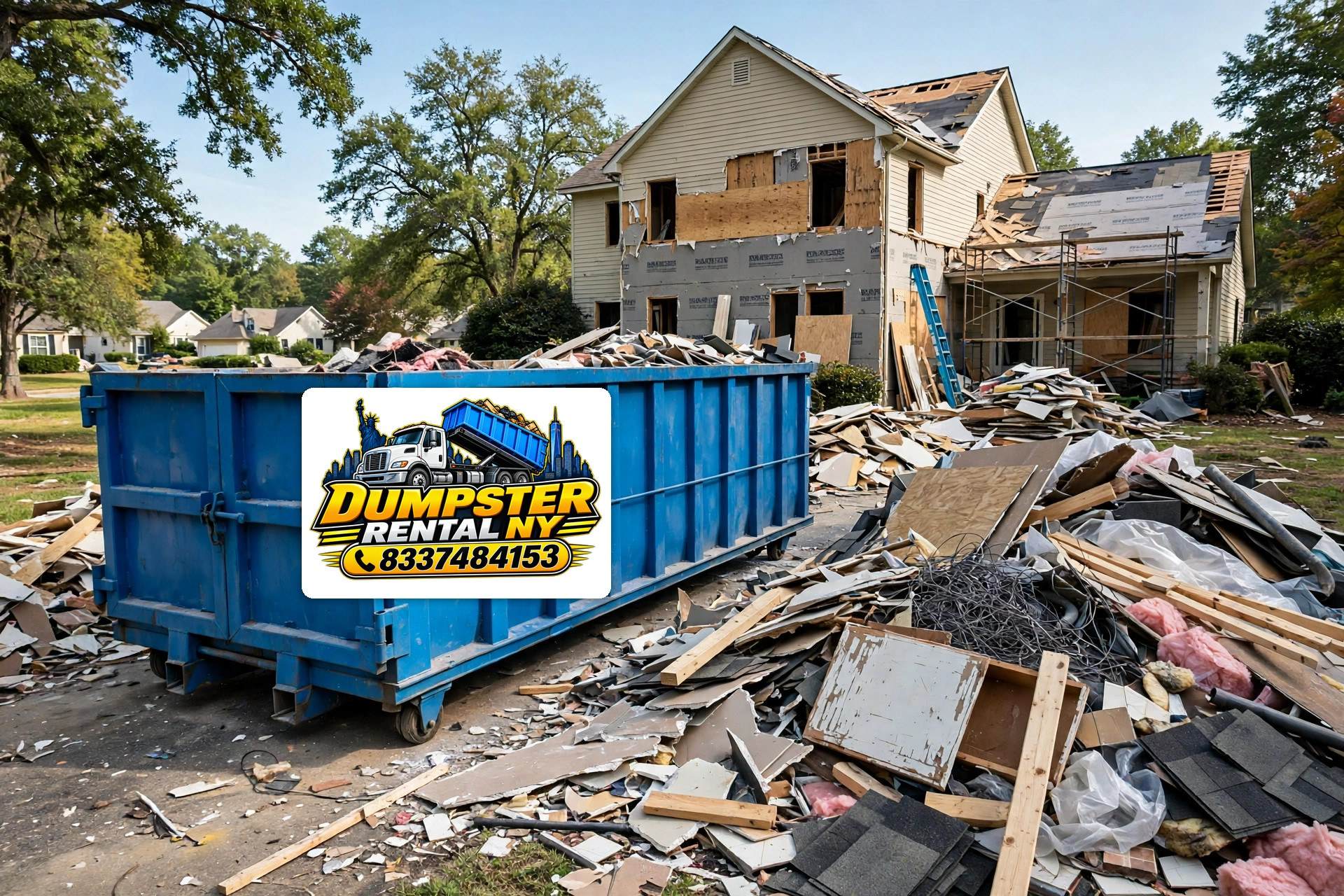
A dumpster placed entirely on private property, such as your driveway, generally needs no permit anywhere in New York State. That covers most yard jobs. A dumpster placed on a public street or in the right of way usually needs a municipal permit. In New York City, container permits are issued by NYC DOT, not DSNY, and the standard Commercial Refuse Container permit covers one container for up to 5 consecutive days, obtained by the carting company. Upstate cities run their own programs: Buffalo requires a Public Works permit applied for at least 7 business days ahead, with proof of liability insurance, Rochester requires a right of way permit, Syracuse issues right of way permits through its Central Permit Office, Albany uses a Sidewalk and Barricade Permit, and Yonkers requires an Engineering Department permit. Long Island towns and villages vary town by town. Permit rules vary by municipality, so call us for guidance on your city before you book a street placement. And remember Dig Safely New York: call 811 before any ground disturbance, which matters for stump removal and digging work.
The delivery truck needs about 60 feet of clear space to drop the container and roughly 23 to 25 feet of vertical clearance. Yard jobs add a placement question: the box should sit close to the debris, but on firm ground, not on a soft lawn after rain. A driveway is the usual spot, with a wheelbarrow carrying debris from the yard. Mention tight access, steep grades, soft ground, and low branches when you book. The standard rental period is 7 days, and longer rentals are available. If you need a container quickly, call and ask about availability for your area and your date.
Cut limbs to fit the box and stack them flat, because long springy branches waste half the space in any container. Load the longest limbs along the floor first, then fill with brush and leaves on top. Compress leaves and brush as you go, and keep the load level with the top rail. Never let limbs stick out over the sides, and never heap above the rail. Work in sections across the yard so you can see progress, and keep a path clear from the work area to the box. If the box fills before the yard is clear, call us and we can arrange a pickup and, if needed, a second container.
A small cleanup fits a 10 yard box, a medium cleanup takes a 15 or 20 yard box, and a major clearing or storm cleanup takes a 30 yard box. Yard debris fills by volume, so size by the pile, not the weight.
Tree limbs and brush are fine. Large stumps are heavy and awkward, so mention them when you book and we will plan accordingly.
Small amounts are fine, but soil and sod are heavy, and wet soil is heavier still. A load that is mostly soil belongs in a small container, so mention it when you book.
Yes. Storm debris is one of our busiest jobs. Call early after a storm and ask about availability, because demand spikes across the affected area.
Not if it sits entirely on private property such as your driveway. Street placement usually needs a municipal permit, and in New York City those permits come from NYC DOT, not DSNY.
The standard rental period is 7 days, and longer rentals are available. Call (833) 748-4153 to arrange the schedule that fits your project.