Remodels, additions, demolition, and job site debris, with swap outs that keep multi week contractor jobs moving. One call covers the whole state.
Construction work produces debris in waves, and a construction dumpster has to keep up with the crew, not slow it down. Demo week fills a container fast. Framing and drywall produce offcuts and packaging for weeks. Flooring and finish work add one last wave at the end. Our construction dumpster rental covers the whole cycle, with the right size for each phase and swap outs that exchange a full container for an empty one without a gap in the schedule. Call (833) 748-4153, tell us the scope and the timeline, and we will plan the container schedule with you.
New York is building. Housing permits rose by a third in the third quarter of 2026, New York City completed more homes in 2025 than in any year since 1965, and the Micron semiconductor campus near Syracuse broke ground in early 2026. Renovation is just as busy: the median New York home was built in 1959, and in Buffalo and Rochester the median home dates to 1939 or earlier, so plaster and lath, old kitchens, and worn roofs keep contractors working year round. Every one of those projects needs a place to put its debris, and that is what we do, all day, all over the state.
| Size | Dimensions | Capacity | Included weight | Best for |
|---|---|---|---|---|
| 10 yard | 14 ft long, 7.5 ft wide, 3.5 ft tall | About 3 pickup loads | 1 to 2 tons | Small cleanout, half bath remodel, heavy debris |
| 15 yard | 16 ft long, 7.5 ft wide, 4.5 ft tall | 4 to 5 pickup loads | About 2 tons | Basement finish, deck removal, downsizing |
| 20 yard | 22 ft long, 7.5 ft wide, 4.5 ft tall | 6 to 8 pickup loads | 2 to 4 tons | Whole room remodel, roofing tear off, full cleanout |
| 30 yard | 22 ft long, 7.5 ft wide, 6 ft tall | 9 to 12 pickup loads | 3 to 5 tons | Whole home renovation, estate cleanout |
| 40 yard | 22 ft long, 7.5 ft wide, 8 ft tall | About 12 pickup loads | 4 to 5 tons | Full demolition, commercial, multi unit work |
Most residential remodels run on a 20 yard dumpster for a single room or a 30 yard dumpster for a whole home renovation. Additions and large remodels usually take a 30 yard box, sometimes with a swap midway. Full demolition and commercial work take a 40 yard dumpster. Small jobs like a half bath remodel or a concrete pour cleanout take a 10 yard dumpster. The table above shows the full range, and every size has its own page with dimensions and project guidance.
The material matters as much as the volume. Plaster and lath from an old house weighs far more than modern drywall, and a room of plaster debris can use up the weight allowance faster than a contractor expects. Concrete, brick, and dirt must go in a small heavy rated container, never in a 30 or 40 yard box. Roofing shingles are heavy too, and a large tear off needs a weight conversation before you book. Tell us the materials when you call, and we will match the box to the load.
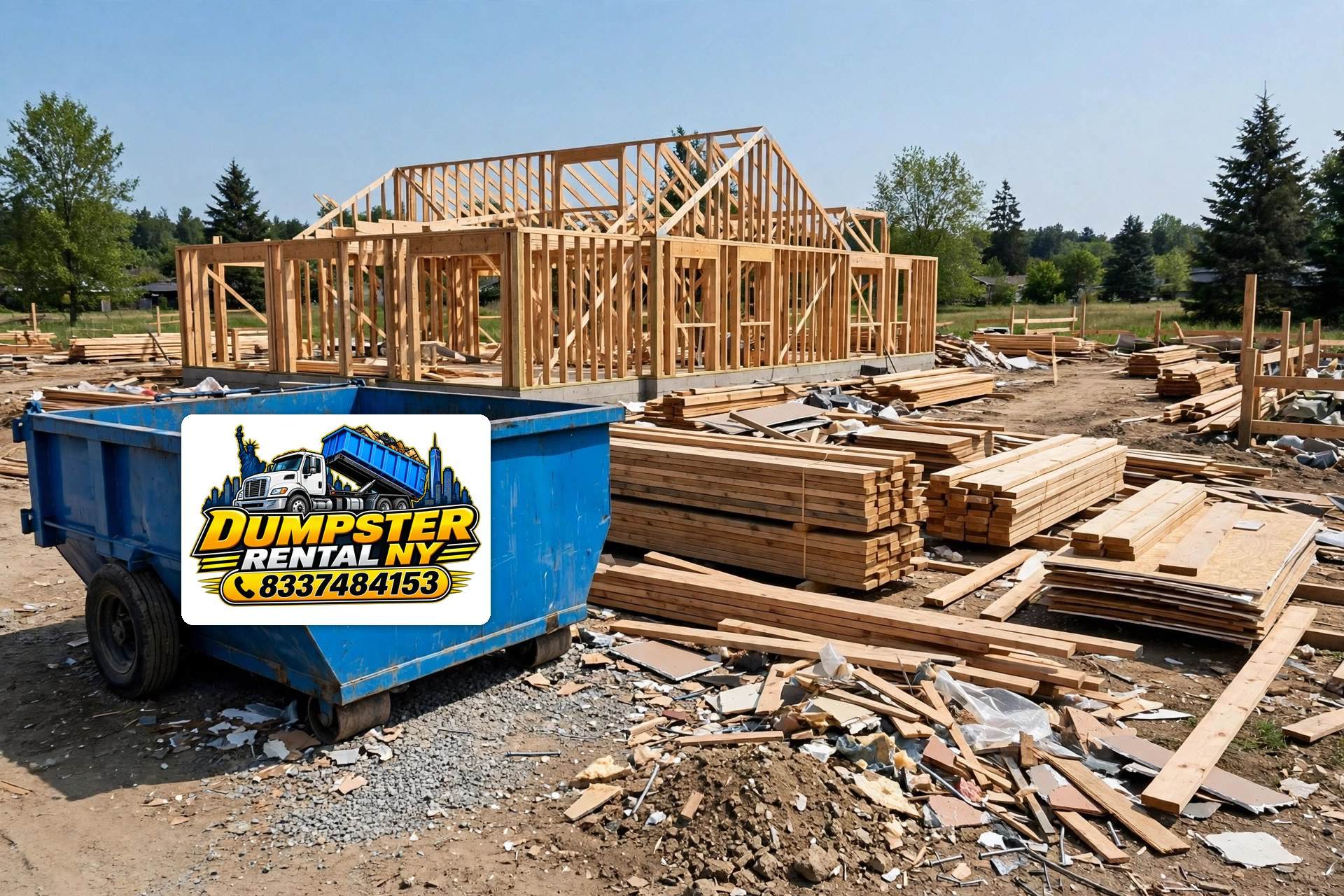
Remodels and gut renovations. Kitchens, baths, whole floors, and whole homes. Demo debris, framing offcuts, drywall, flooring, trim, doors, and packaging. The 20 and 30 yard boxes are the standard here, with swaps for multi week jobs.
Additions and new construction. Framing lumber offcuts, sheathing, drywall, roofing debris, siding, and packaging from fixtures and appliances. A 30 yard box on site through the build keeps the lot clear and the crew working.
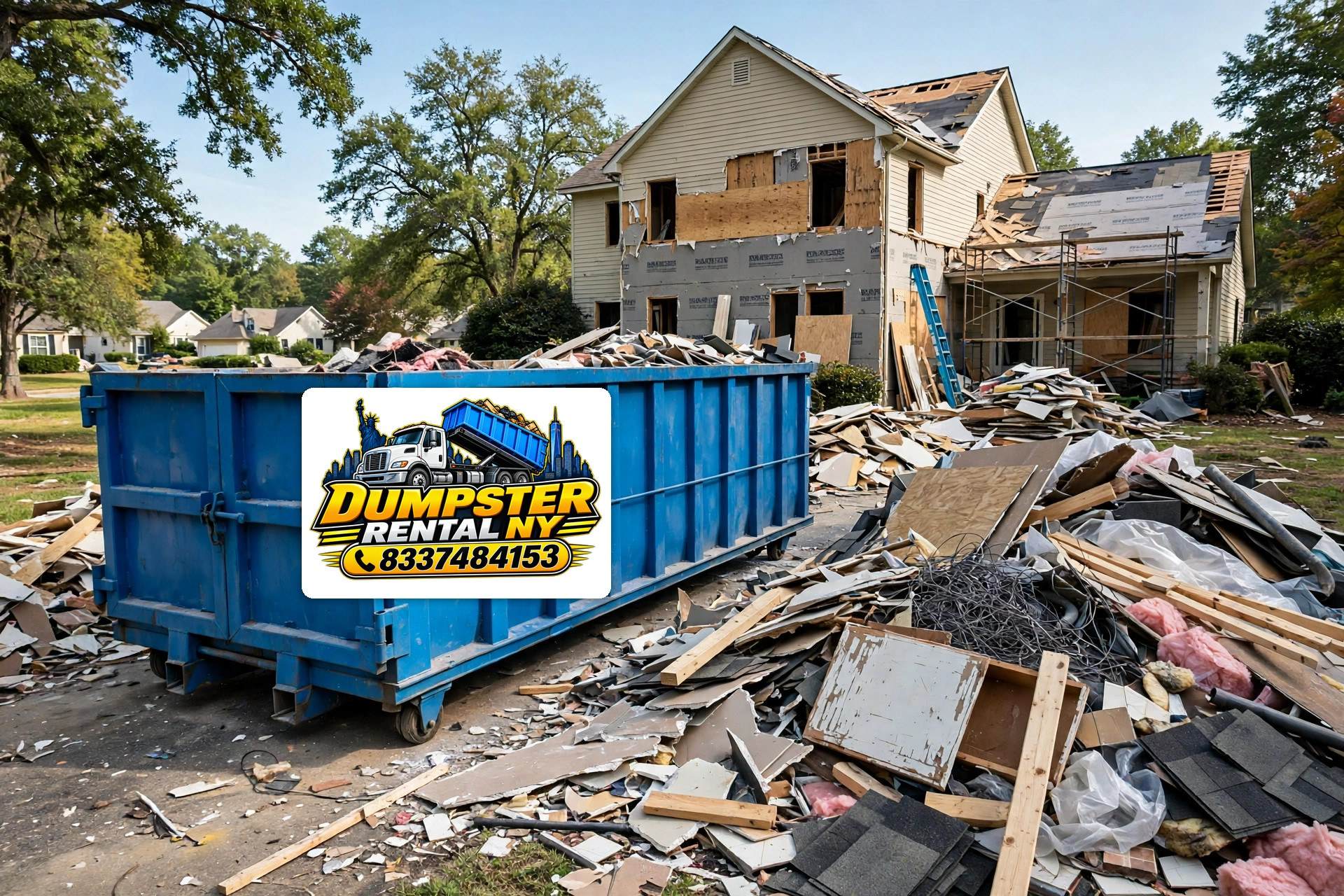
Demolition. Interior demo down to the structure, garage and outbuilding demolition, and full structure demolition. Demolition debris is bulky and light, which suits the 30 and 40 yard boxes. Concrete and masonry from a demolition belong in a separate small container.
Roofing and siding jobs. Tear offs, siding replacement, and window replacement. Shingles and siding fill a box by volume and by weight, so size by the roof or the house, not by guesswork. Our roofing dumpster rental page covers tear off sizing.
Site cleanup and punch list debris. The last wave of a job: packaging, offcuts, broken fixtures, and general site debris. A smaller box at the end of a job keeps the site clean for handover without paying for capacity you no longer need.
A swap out exchanges a full container for an empty one, so the crew never waits for a pickup. Schedule swaps in advance for multi week jobs, and call when the box is three quarters full rather than waiting until it is level with the rail. A box that is overfilled cannot be picked up, and the crew loses time removing material. Plan the swap schedule at booking, and adjust it as the job progresses: demo week may need two swaps, framing weeks may need none. The standard rental period is 7 days, and longer rentals are available for jobs that run for weeks or months. If you need a container quickly, call and ask about availability for your area and your date.
Contractor tip: place the box as close to the work as the crew needs it, and keep material deliveries and contractor parking clear of the container. A box in the wrong spot costs steps all day. Call (833) 748-4153 to talk through placement before delivery day.
Heavy debris is the rule that catches construction jobs out. Concrete, brick, block, stone, and dirt must go in a small container, usually a 10 yard box, because a large container full of heavy material cannot legally be hauled. Plan a separate heavy debris container for any job that includes a concrete slab, a brick chimney, a foundation wall, or a large dirt pile. Mixed loads with small amounts of heavy material are fine, but the heavy portion must stay small. Roofing shingles sit in the middle: a single layer tear off fits a 20 or 30 yard box, but multiple layers or a large roof may need a split load. Tell us the materials at booking and we will plan the split with you.
Drywall, plaster, lumber, framing offcuts, flooring, carpet, siding, roofing shingles, concrete in small amounts, brick in small amounts, dirt in small amounts, fixtures, doors, windows without hazardous glazing, and packaging are all fine in a construction dumpster. New York law keeps some items out of every dumpster, whatever the job:
Pre 1978 buildings need care around lead paint and asbestos. Asbestos containing material needs licensed abatement and never goes in a dumpster. Treated lumber and railroad ties may need separate handling, so ask about them before you load. If you are unsure about a single item, call (833) 748-4153 before you load it.
A dumpster placed entirely on private property, such as a driveway, yard, lot, or job site, generally needs no permit anywhere in New York State. A dumpster placed on a public street or in the right of way usually needs a municipal permit. In New York City, container permits are issued by NYC DOT, not DSNY. The standard Commercial Refuse Container permit covers one container for up to 5 consecutive days and is obtained by the carting company. Construction debris permits for worksites holding a DOB or DOT construction permit run 30 to 90 days and are issued only to DOT registered carting companies or registered general contractors, typically for 20 and 40 yard containers. Upstate cities run their own programs: Buffalo requires a Public Works permit applied for at least 7 business days ahead, with proof of liability insurance, Rochester requires a right of way permit, Syracuse issues right of way permits through its Central Permit Office, Albany uses a Sidewalk and Barricade Permit, and Yonkers requires an Engineering Department permit. Permit rules vary by municipality, so call us for guidance on your city before you book a street placement. And remember Dig Safely New York: call 811 before any ground disturbance.
The delivery truck needs about 60 feet of clear space to drop the container and roughly 23 to 25 feet of vertical clearance. Job sites add their own constraints: material stockpiles, scaffolding, equipment, and crew parking all compete for the same space. Walk the site before delivery day and pick a spot that stays clear through the job, close to the work but out of the way of deliveries. Mention tight access, steep grades, soft ground, and overhead wires when you book. A muddy lot after rain, a narrow Brooklyn block, or a steep Hudson Valley site all change the delivery plan, and the booking call is where we sort that out. Boards under the container rails spread the load and protect pavement and concrete pads.
Load heavy and flat first, building a level base of drywall, lumber, and flat items, then fill with bulkier debris on top. Cut long lumber to fit the box, break down packaging, and keep the load level with the top rail. Never let debris stick out over the sides, and never heap above the rail. Cover the box when it rains, because rainwater adds weight to open containers and soaked debris is heavy to handle. Keep prohibited items out from the start, because one banned item can hold up a pickup. If the box fills before the job is done, call for a swap and keep working.
A single room remodel usually takes a 20 yard box, a whole home renovation or addition takes a 30 yard box, and full demolition takes a 40 yard box. Tell us the scope and materials and we will confirm.
Yes. A swap exchanges a full container for an empty one so the crew keeps working. Schedule swaps in advance and call when the box is three quarters full.
Only small amounts mixed into a light load. A large amount of concrete, brick, or dirt needs its own small 10 yard container, because a big box full of heavy material cannot be hauled.
Street placement needs a container permit from NYC DOT, not DSNY. Worksites with their own construction permits can get construction debris permits running 30 to 90 days. Driveway and lot placement generally needs no permit.
Hazardous waste, wet paint, solvents, chemicals, tires, batteries, propane tanks, asbestos containing material, medical waste, and electronics are not allowed under New York rules.
The standard rental period is 7 days, and longer rentals are available for jobs that run weeks or months. Call (833) 748-4153 to arrange the schedule that fits your job.