Whole house contents cleared at your pace. Patient, no pressure scheduling for a hard job, with room for sorting and a container that fits the whole house.
An estate cleanout is not a normal cleanout. It is a whole house of belongings, often accumulated over decades, cleared after a move, a downsizing, or a loved one passing. It takes days of sorting, deciding, and carrying, and it takes emotional energy as well as physical effort. Our estate cleanout dumpster rental is built for that reality: a large container in the driveway, a rental period that fits the pace of the work, and no pressure to rush. Call (833) 748-4153, tell us the size of the house and the timeline you are working to, and we will plan the container around you.
New York's housing stock makes estate cleanouts a common job here. The median home was built in 1959, and in Buffalo and Rochester the median home dates to 1939 or earlier. Those homes have basements and attics that hold decades of furniture, boxes, tools, and keepsakes, and clearing them is a bigger job than the living space suggests. A three bedroom house with a full basement and attic can fill a 30 yard container without trying, and a larger home with outbuildings can need more. The honest thing is to plan for the whole house, not just the rooms you can see.
| Size | Dimensions | Capacity | Included weight | Best for |
|---|---|---|---|---|
| 10 yard | 14 ft long, 7.5 ft wide, 3.5 ft tall | About 3 pickup loads | 1 to 2 tons | Small cleanout, half bath remodel, heavy debris |
| 15 yard | 16 ft long, 7.5 ft wide, 4.5 ft tall | 4 to 5 pickup loads | About 2 tons | Basement finish, deck removal, downsizing |
| 20 yard | 22 ft long, 7.5 ft wide, 4.5 ft tall | 6 to 8 pickup loads | 2 to 4 tons | Whole room remodel, roofing tear off, full cleanout |
| 30 yard | 22 ft long, 7.5 ft wide, 6 ft tall | 9 to 12 pickup loads | 3 to 5 tons | Whole home renovation, estate cleanout |
| 40 yard | 22 ft long, 7.5 ft wide, 8 ft tall | About 12 pickup loads | 4 to 5 tons | Full demolition, commercial, multi unit work |
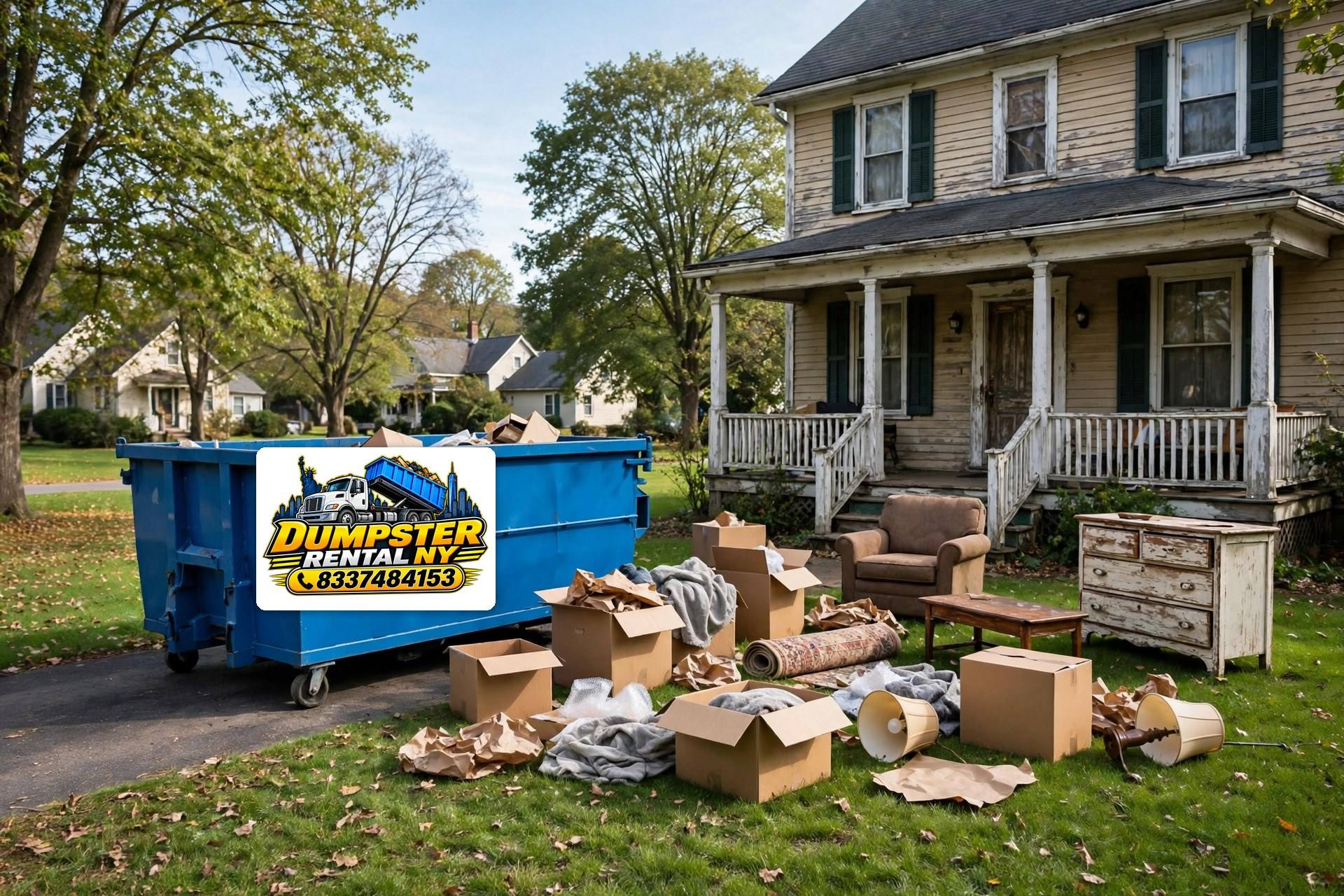
A small apartment or a lightly furnished house usually takes a 20 yard dumpster. A typical three or four bedroom home with a full basement and attic takes a 30 yard dumpster, which is the standard estate cleanout size. A large home with a packed basement, attic, garage, and outbuildings takes a 40 yard dumpster, or a 30 yard box with a swap midway. The 10 yard dumpster and 15 yard dumpster are for partial cleanouts, such as a single room or a garage, not a whole house. If you are unsure, tell us the number of rooms and how full they are, and we will point you to the right size.
Sort before you load. Walk the house room by room and set aside what stays in the family, what goes to donation, what goes to recycling, and what goes in the dumpster. Sorting first prevents the regret of throwing away something that mattered, and it keeps the dumpster for the debris that truly belongs there. Give the sorting more time than you think it needs, because it is the slowest part of the job.
Work room by room. Clear one room completely before moving to the next, so you can see progress and the house does not become a maze of half cleared rooms. Start with the rooms that matter most for the sale or the handover, and leave the basement and attic for later, because they are the slowest and the heaviest.
Set aside donations and recyclables. Furniture in good condition, clothing, books, and household goods can go to donation. Metal, cardboard, and clean wood can go to recycling. Setting those aside before you load the dumpster saves space in the container and keeps usable items out of the landfill.
Plan for the basement and attic. Basements and attics in old New York homes hold the most debris and the heaviest items: old furniture, tools, paint cans, and boxes that have not been opened in years. Budget a full day for each, and ask for help carrying heavy items up and down stairs.
Allow more time than you expect. An estate cleanout always takes longer than the first estimate. A week is normal for a typical house, and two weeks is normal for a large one. The standard rental period is 7 days, and longer rentals are available, so tell us your timeline at booking and we will arrange a rental that fits it.
Whole house contents after a loved one passing. The most common estate cleanout, and the hardest. Furniture, clothing, kitchen contents, books, tools, and a lifetime of belongings. Take your time, ask family for help, and let us handle the container.
Downsizing from a house to an apartment. Clearing rooms that will not fit in the new home, including furniture, boxes, and a garage or basement full of stored items. A 20 or 30 yard box handles most downsizing jobs.
Moving and relocation cleanouts. Clearing a house before a move, including items that are not worth moving and debris from years of storage. A 20 yard box fits most moving cleanouts.
Pre sale cleanouts. Clearing a house before listing it, so it shows clean and empty. A 20 or 30 yard box, booked for the week before the listing photos, is the usual pattern.
No pressure: take the time you need. If the cleanout runs longer than planned, call (833) 748-4153 and we will extend the rental. The container waits for you, not the other way around.
Estate cleanouts are mostly light bulky debris: furniture, boxes, clothing, and household junk. Heavy debris appears in the basement and the garage: old tools, paint cans, concrete blocks, and sometimes a pile of brick or stone. Small amounts of heavy material mixed into a light load are fine. A large pile of concrete, brick, or dirt needs its own small container, so mention it when you book. Old paint is a common estate item: dried out paint cans are usually fine, but wet paint is not allowed, so leave wet paint cans open to dry, or set them aside for a separate disposal route.
Household junk, furniture, mattresses, carpet, clothing, books, boxes, kitchen contents, tools, drywall, wood, and yard waste are all fine in an estate cleanout dumpster. New York law keeps some items out of every dumpster, whatever the job:
Estate cleanouts often turn up items on the banned list: old paint, solvents, batteries, electronics, and propane tanks from a grill or a heater. Set those aside as you sort, and ask us about separate disposal routes for them. Appliances are fine once refrigerant has been recovered from any unit that has it. If you are unsure about a single item, call (833) 748-4153 before you load it.
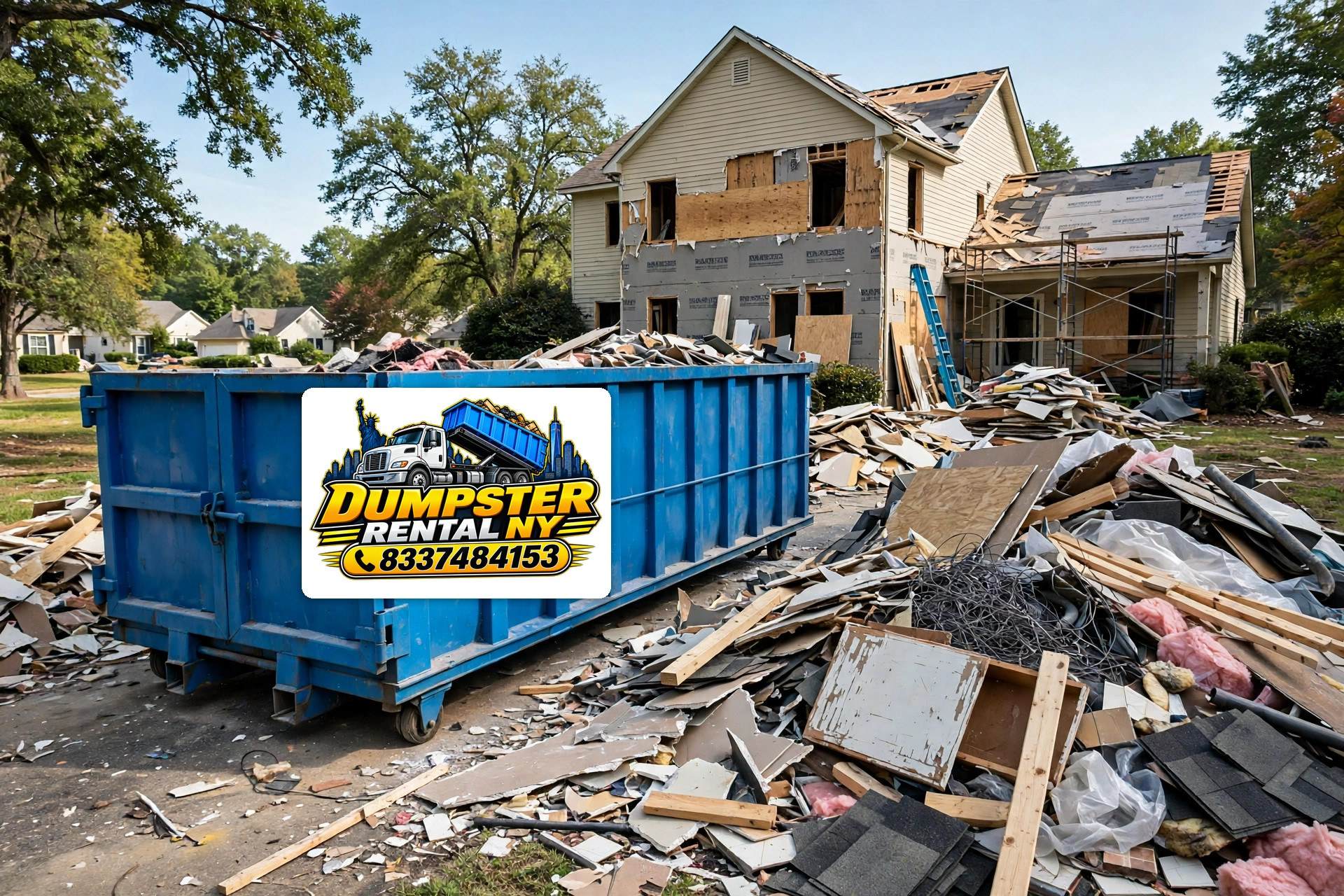
A dumpster placed entirely on private property, such as your driveway, generally needs no permit anywhere in New York State. That covers most estate cleanouts. A dumpster placed on a public street or in the right of way usually needs a municipal permit. In New York City, container permits are issued by NYC DOT, not DSNY, and the standard Commercial Refuse Container permit covers one container for up to 5 consecutive days, obtained by the carting company. A bulk item permit exists for homeowners clearing bulk items, also up to 5 consecutive days. Upstate cities run their own programs: Buffalo requires a Public Works permit applied for at least 7 business days ahead, with proof of liability insurance, Rochester requires a right of way permit, Syracuse issues right of way permits through its Central Permit Office, Albany uses a Sidewalk and Barricade Permit, and Yonkers requires an Engineering Department permit. Permit rules vary by municipality, so call us for guidance on your city before you book a street placement. And remember Dig Safely New York: call 811 before any ground disturbance.
The delivery truck needs about 60 feet of clear space to drop the container and roughly 23 to 25 feet of vertical clearance. Park cars out of the driveway, move bins and basketball hoops, and check for low wires and low branches over the drop spot. Mention tight turns, steep grades, and narrow streets when you book. Place the box as close to the door you will carry items through as you can, because an estate cleanout means hundreds of trips, and every step counts. Boards under the container rails protect asphalt, pavers, and decorative concrete, so mention your driveway surface when you book.
Load heavy and flat first, building a level base, then fill with bulkier items on top. Break down furniture where you can, and fill gaps with bagged debris and small items as you go. Keep the load level with the top rail, and never let debris stick out over the sides. Work room by room, and take breaks: this is tiring work, and it is also emotional work. If the box fills before the house is clear, call us and we can arrange a pickup and a swap, so the cleanout keeps moving. The standard rental period is 7 days, and longer rentals are available. If you need a container quickly, call and ask about availability for your area and your date.
A typical three or four bedroom home with a full basement and attic takes a 30 yard box. A small apartment takes a 20 yard box, and a large home with outbuildings may need a 40 yard box or a swap.
A week is normal for a typical house, and two weeks is normal for a large one. Sorting takes longer than loading. The standard rental is 7 days, and longer rentals are available.
Yes. Set aside what stays in the family, what goes to donation, and what goes to recycling before you start loading. Sorting first prevents regret and saves space in the container.
Dried out paint cans are usually fine, but wet paint is not allowed. Leave wet paint cans open to dry, or set them aside for a separate disposal route.
Not if it sits entirely on private property such as your driveway. Street placement usually needs a municipal permit, and in New York City those permits come from NYC DOT, not DSNY.
Call us and we will extend the rental. The standard period is 7 days, and longer rentals are available. The container waits for you, not the other way around.