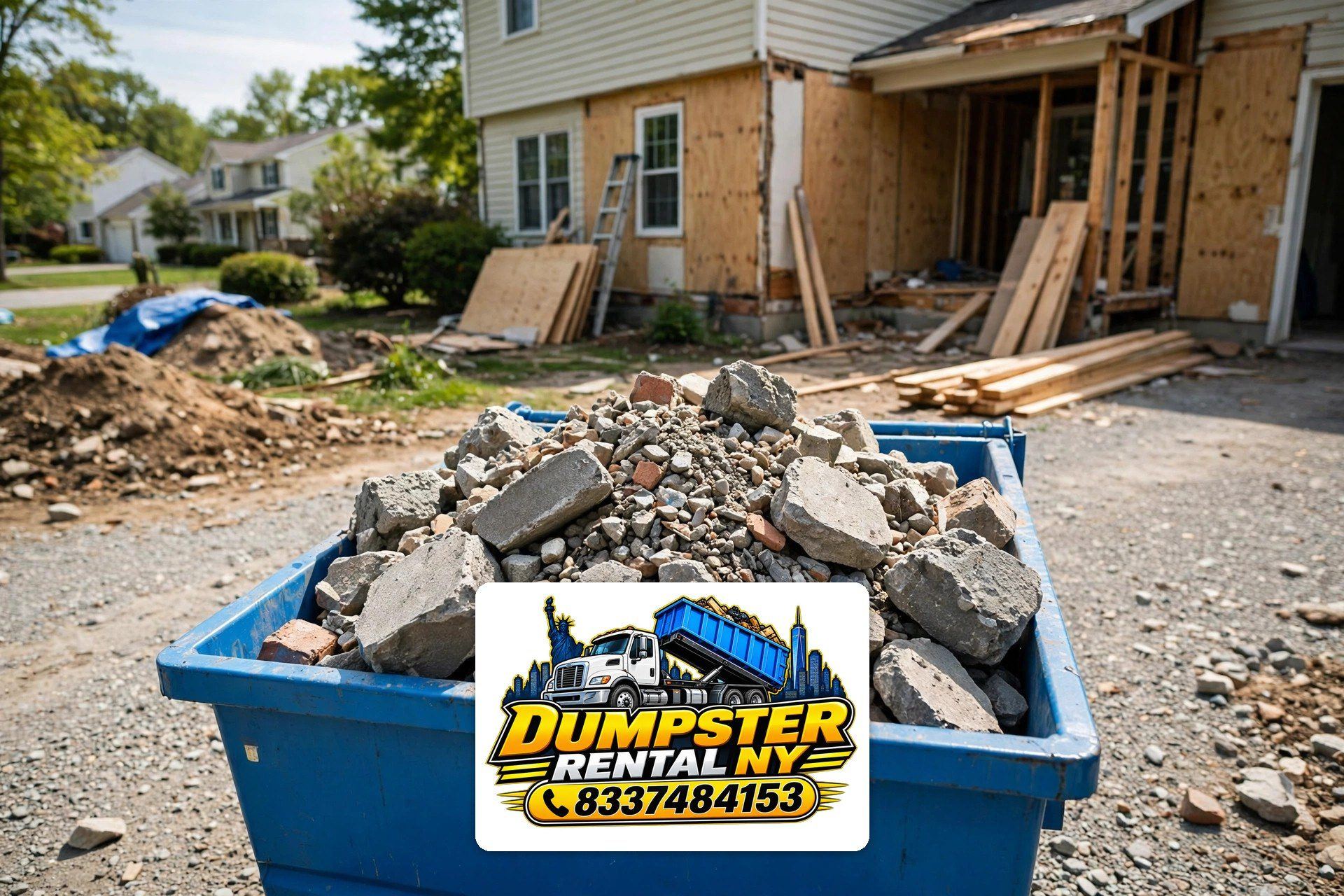
Heavy debris needs a small box. Concrete, brick, block, stone, and dirt go in low, heavy rated containers that keep your haul legal and on schedule.
Concrete, brick, block, stone, and dirt are the heaviest materials a dumpster ever carries, and they follow a rule that surprises first time renters: the bigger the load, the smaller the box. A 30 yard container full of concrete cannot legally be hauled, and the driver will have to leave it behind. A 10 yard container full of the same material is a normal, legal load. That is why concrete dumpster rental means small containers, level loads, and honest weight planning. Call (833) 748-4153, describe what you are breaking up or digging out, and we will size the container to the material.
New York produces a steady stream of heavy debris. Old concrete patios and sidewalks in Buffalo and Rochester, brick chimneys and garden walls in the Hudson Valley, stone foundations in upstate farmhouses, and dirt from fence, deck, and drainage projects across Long Island all end up in small containers. Renovation work in the state's oldest homes adds brick and plaster to the mix. Whatever the source, the rule is the same: heavy material goes in a small box, filled level, and hauled on schedule.
| Size | Dimensions | Capacity | Included weight | Best for |
|---|---|---|---|---|
| 10 yard | 14 ft long, 7.5 ft wide, 3.5 ft tall | About 3 pickup loads | 1 to 2 tons | Small cleanout, half bath remodel, heavy debris |
| 15 yard | 16 ft long, 7.5 ft wide, 4.5 ft tall | 4 to 5 pickup loads | About 2 tons | Basement finish, deck removal, downsizing |
| 20 yard | 22 ft long, 7.5 ft wide, 4.5 ft tall | 6 to 8 pickup loads | 2 to 4 tons | Whole room remodel, roofing tear off, full cleanout |
| 30 yard | 22 ft long, 7.5 ft wide, 6 ft tall | 9 to 12 pickup loads | 3 to 5 tons | Whole home renovation, estate cleanout |
| 40 yard | 22 ft long, 7.5 ft wide, 8 ft tall | About 12 pickup loads | 4 to 5 tons | Full demolition, commercial, multi unit work |
For heavy debris, the 10 yard dumpster is the standard choice. At 14 feet long, 7.5 feet wide, and 3.5 feet tall, with an included weight allowance of 1 to 2 tons, it holds a real amount of concrete, brick, or dirt in a legal load. The low 3.5 foot walls make loading heavy broken pieces by hand far easier than a taller box. A 15 yard dumpster can take a mixed load with a moderate amount of heavy material in it, but it is not a heavy debris container, and a load that is mostly concrete will exceed its allowance. The 20, 30, and 40 yard boxes are never the right choice for a heavy load, whatever the size of the project. A large concrete job needs several small containers in sequence, not one big one.
Concrete patios, sidewalks, and driveways. Breaking up a concrete slab produces heavy rubble in large pieces. Break it into pieces one person can lift, load it flat and level, and keep the load in a 10 yard box. A large driveway or patio may need two or three loads in sequence.
Brick chimneys, walls, and fireplaces. Brick is heavy and dense, and a chimney taken down to the roofline or a garden wall demolished in full fills a small container fast. Mortar and brick dust add weight, so load level and do not heap.
Block, stone, and masonry. Cinder block, concrete block, natural stone, and retaining wall block all count as heavy debris. Stone from an old foundation or a retaining wall is especially dense, so call us with the volume before you book.
Dirt, soil, and excavation spoil. Dirt from a fence line, a deck footing, a drainage trench, or a garden bed is heavy, and wet dirt is heavier still. A small pile of dirt fits a 10 yard box. A large excavation needs several loads, planned in advance.
Asphalt removal. Asphalt from a driveway or a parking area is heavy debris, and it follows the same small container rule. Call us before you book an asphalt job, so we can confirm the load plan and the container size.
Mixed renovation debris with a heavy portion. A renovation that produces both light debris and a pile of brick, tile, or concrete needs two containers: a 15 or 20 yard box for the light material and a 10 yard box for the heavy material. That split keeps both loads legal and on schedule.
A clean load is a container filled with one material, such as concrete only, or dirt only. Clean loads are easier to handle at the disposal site, because the material can be processed or recycled without sorting. A mixed load combines heavy material with light junk, which is normal for a renovation but harder to sort. Where you can, keep your heavy load clean: concrete in one box, dirt in another, light debris in a third. It is not always practical, and mixed loads are accepted, but a clean load is the smoothest path from your driveway to disposal. Tell us what is going in when you book, and we will advise on the split.
Weight warning: a 10 yard box of concrete is a full load. Do not heap it, do not fill it above the rail, and do not mix in extra heavy material at the end. Call (833) 748-4153 if your heavy project is large, so we can plan several loads.
Break concrete and masonry into pieces one person can lift comfortably, and load the heaviest pieces low and evenly across the floor of the box. An uneven load is harder to haul and harder to tarp. Keep the load level with the top rail, and never heap above it. Wear gloves and eye protection when breaking and loading masonry, and use a wheelbarrow for the carry from the work area to the box. If you are using a machine to load, keep the machine clear of the container walls and load in layers. A level, even load is the difference between a pickup that happens on schedule and a pickup that waits while material is removed.
Concrete, brick, block, stone, masonry, dirt, soil, asphalt, tile, and porcelain fixtures are all fine in a concrete dumpster. Small amounts of light debris mixed in are usually fine too, but a clean heavy load is better. New York law keeps some items out of every dumpster, whatever the job:
Contaminated soil, soil with chemical or oil contamination, and asbestos containing material need separate handling and never go in a dumpster. If your soil or masonry comes from an old industrial site, a gas station lot, or a building with known contamination, tell us before you book. If you are unsure about a single item, call (833) 748-4153 before you load it.
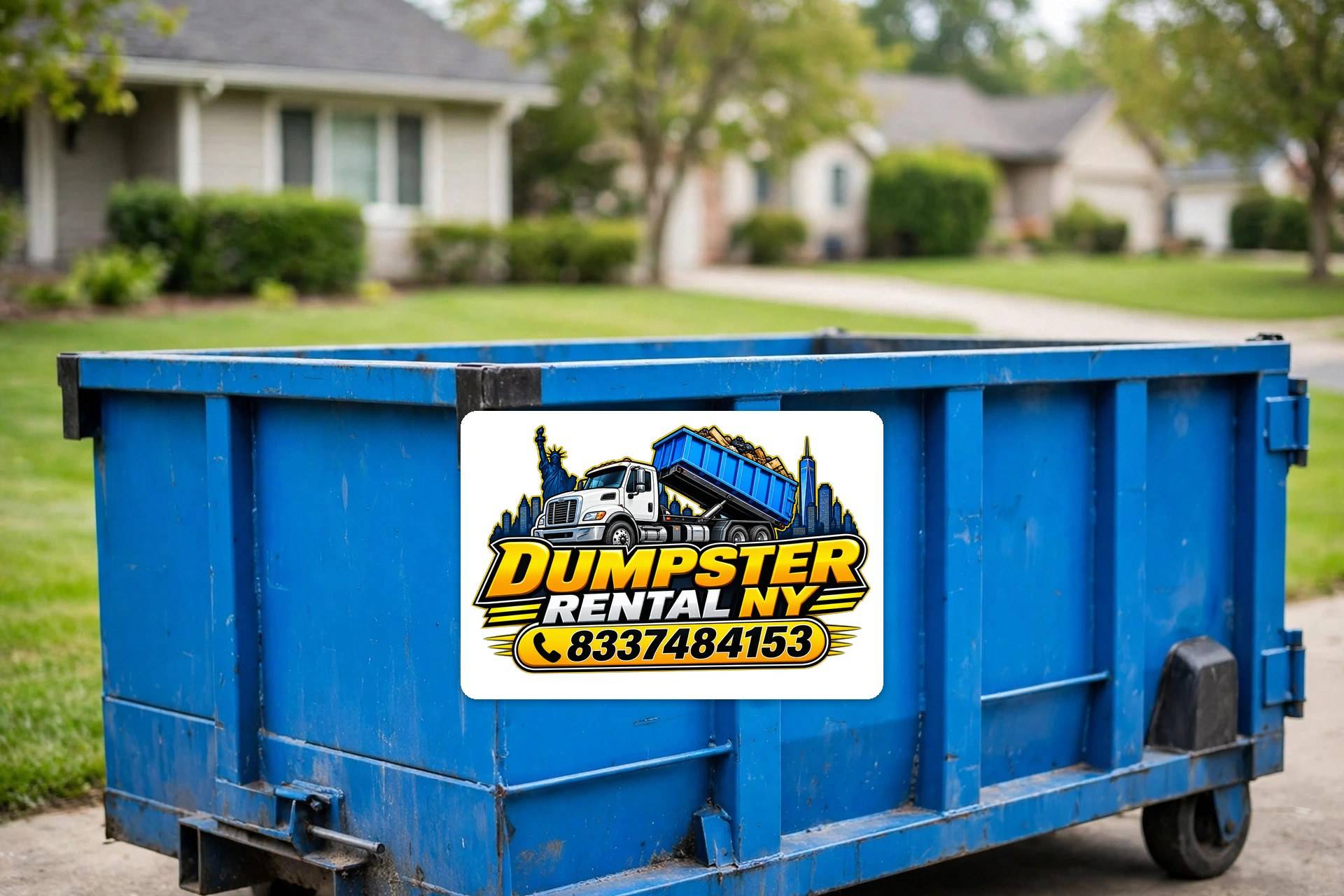
A dumpster placed entirely on private property, such as your driveway, generally needs no permit anywhere in New York State. That covers most concrete jobs. A dumpster placed on a public street or in the right of way usually needs a municipal permit. In New York City, container permits are issued by NYC DOT, not DSNY, and the standard Commercial Refuse Container permit covers one container for up to 5 consecutive days, obtained by the carting company. Upstate cities run their own programs: Buffalo requires a Public Works permit applied for at least 7 business days ahead, with proof of liability insurance, Rochester requires a right of way permit, Syracuse issues right of way permits through its Central Permit Office, Albany uses a Sidewalk and Barricade Permit, and Yonkers requires an Engineering Department permit. Permit rules vary by municipality, so call us for guidance on your city before you book a street placement. And remember Dig Safely New York: call 811 before any ground disturbance, which matters for every digging and demolition job.
The delivery truck needs about 60 feet of clear space to drop the container and roughly 23 to 25 feet of vertical clearance. Heavy loads add a placement question: the box should sit on firm, level ground, close to the work, so the carry distance for heavy pieces is short. A soft lawn after rain, a steep grade, or a narrow access path all change the plan, so mention them when you book. Boards under the container rails spread the load and protect asphalt, pavers, and concrete pads from the weight of a full heavy container. The standard rental period is 7 days, and longer rentals are available. If you need a container quickly, call and ask about availability for your area and your date.
A large concrete or dirt project, such as a full driveway removal or a major excavation, needs several small containers in sequence. Plan the sequence at booking: the first box arrives, you fill it, we pick it up and drop an empty one, and the work continues. That rhythm keeps the crew working and the site clear. Tell us the total volume when you call, even roughly, and we will estimate the number of loads. A rough estimate beats a surprise, and the phone call costs nothing.
A 10 yard dumpster is the standard for concrete, brick, block, stone, and dirt. Heavy debris fills a container by weight before it fills by volume, so a small box keeps the load legal.
No. A 30 yard box full of concrete would far exceed its weight allowance and cannot be hauled. Large concrete jobs need several 10 yard loads in sequence, not one big box.
A clean load is a container filled with one material, such as concrete only or dirt only. Clean loads are easier to process at the disposal site. Mixed loads are accepted, but a clean load is smoother.
Yes, clean dirt and soil are accepted in a small container. Contaminated soil needs separate handling. Wet dirt is heavy, so mention it when you book.
Not if it sits entirely on private property such as your driveway. Street placement usually needs a municipal permit, and in New York City those permits come from NYC DOT, not DSNY.
The standard rental period is 7 days, and longer rentals are available. Call (833) 748-4153 to arrange the schedule that fits your project.